
Why Do Teeth Get Yellow Again After Whitening? A Panchkula Guide to Longer Lasting Results
Published Date: September 30, 2026 Last Update: September 30, 2026
Author: Dr. Kritika Bansal
You get your teeth professionally whitened, love the brighter smile, and then notice a few months later that the shade doesn't look quite as bright.
Does that mean the whitening treatment didn't work?
Not necessarily.
Teeth naturally accumulate new stains over time. Your diet, oral hygiene, tobacco use, enamel characteristics, age, and even the type of discoloration you have can affect how long your whitening results remain noticeable.
If you're Teeth Whitening in Panchkula or comparing options for the best teeth whitening, understanding why teeth become discolored again can help you get more realistic and longer lasting results.
First, Why Do Teeth Become Yellow?
Teeth aren't naturally pure white.
The natural color of a tooth comes from a combination of the enamel and the dentin underneath it. Dentin has a naturally yellowish tone, and as enamel becomes thinner with age, the underlying dentin can become more noticeable.
On top of that, external stains can accumulate on the enamel.
Common causes include:
1. Tea and Coffee
Regular consumption of tea and coffee can contribute to surface staining, particularly when consumed frequently.
2. Tobacco
Smoking and other tobacco products can cause significant tooth discoloration and can also negatively affect gum health.
3. Certain Foods and Drinks
Dark-colored foods and beverages can contribute to surface staining over time.
4. Poor Plaque Control
Plaque buildup can make teeth appear duller and can contribute to staining.
5. Age
As enamel naturally changes over time, teeth can appear darker or more yellow.
6. Certain Medications or Dental Conditions
Some types of discoloration originate inside the tooth rather than on its surface. These stains may not respond to conventional whitening in the same way as external stains.
This distinction is important because whitening isn't a universal solution for every type of tooth discoloration.
Is Professional Teeth Whitening Better Than Home Remedies?
The internet is full of DIY whitening suggestions, from lemon and baking soda to abrasive powders and other household ingredients.
But "natural" does not automatically mean safe for your teeth.
Acidic substances can damage enamel when used improperly, while abrasive materials can wear the tooth surface or irritate the gums.
Professional whitening is different because the dentist first evaluates your teeth and gums and determines whether whitening is appropriate.
If you have cavities, gum inflammation, cracks, exposed tooth roots, or other dental problems, these should be considered before starting cosmetic whitening.
That's one reason seeing a qualified Panchkula dentist is important before beginning a whitening treatment.
What Is Professional Teeth Whitening?
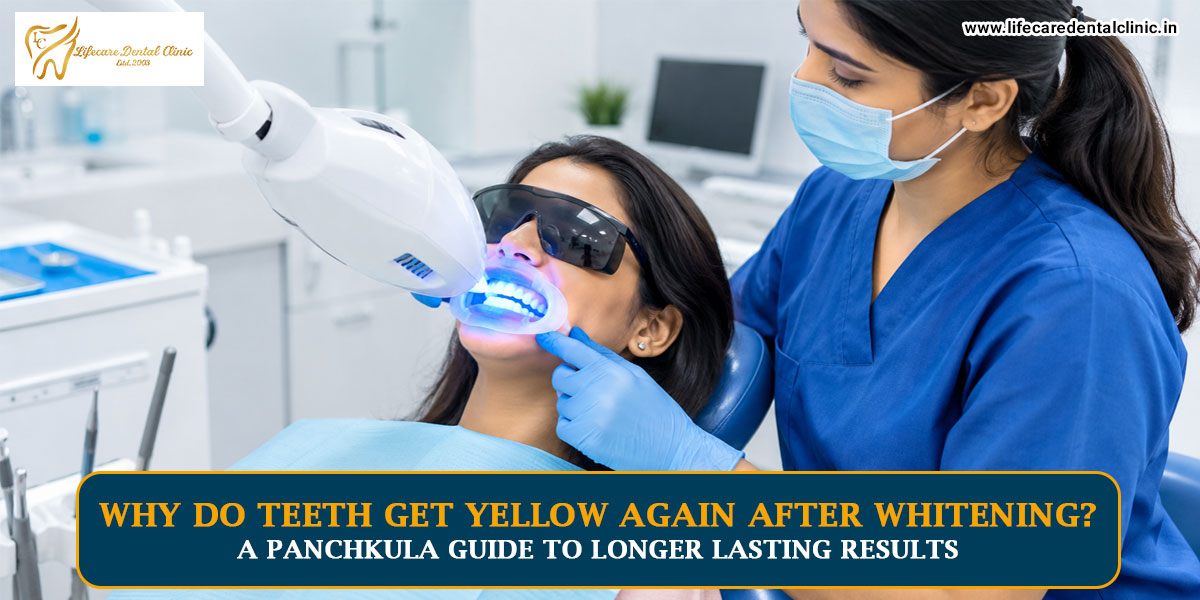
Professional teeth whitening uses dental whitening agents under controlled conditions to lighten the natural color of teeth.
Depending on the treatment approach, whitening may be performed in the dental clinic, provided through dentist-supervised take-home trays, or through a combination of approaches.
The appropriate method depends on your teeth, the type of discoloration, sensitivity, and your desired outcome.
Professional whitening is designed to brighten natural tooth structure. It does not whiten existing crowns, veneers, bridges, fillings, or other restorations.
This is an important consideration if you have visible dental restorations.
How Much Whiter Can Your Teeth Become?
There isn't a guaranteed number of shades that applies to every patient.
The result depends on:
- Your starting tooth shade
- Type of discoloration
- Age
- Enamel characteristics
- Previous dental treatment
- Whitening method
- Your response to the whitening agent
Some people experience a noticeable improvement, while others see a more subtle change.
A responsible dentist should discuss realistic expectations rather than promising an identical result for every patient.
Why Do Teeth Become Sensitive After Whitening?
Temporary tooth sensitivity is one of the most commonly discussed concerns associated with whitening.
Some patients experience sensitivity to:
- Cold water
- Ice cream
- Hot drinks
- Air
- Certain foods
This can happen because whitening agents can temporarily increase sensitivity in some people.
Sensitivity is more likely to be a concern when someone already has:
- Enamel wear
- Gum recession
- Exposed dentin
- Cracked teeth
- Existing tooth sensitivity
- Untreated cavities
This is another reason professional assessment matters.
If you already have sensitive teeth, tell your dentist before whitening rather than trying to push through discomfort.
Your dentist can determine whether whitening is appropriate and discuss ways to manage sensitivity.
Can Sensitive Teeth Still Be Whitened?
Often, yes, but the underlying cause of sensitivity should be considered first.
Sensitivity caused by exposed tooth roots is different from sensitivity caused by tooth decay or enamel damage.
If the sensitivity is related to an untreated dental problem, whitening shouldn't simply be used to cover it up.
A dental examination can help identify the cause and determine whether professional whitening is appropriate.
For patients who are suitable candidates, your dentist can discuss a whitening approach that takes sensitivity into account.
Why Your Teeth May Look Whiter Immediately After Treatment?
Some patients notice a very bright appearance immediately after whitening and then feel that the result has "faded" within a short period.
Part of this can be related to temporary dehydration of the teeth during treatment.
As the teeth rehydrate, their appearance can change.
This doesn't necessarily mean the whitening has failed.
Your final shade should be judged after the teeth have had time to return to their normal hydrated state.
How Long Does Professional Teeth Whitening Last?
There is no fixed expiration date for whitening.
The longevity of results depends heavily on your habits.
If you regularly consume staining beverages, use tobacco, or don't maintain good oral hygiene, new discoloration can develop more quickly.
On the other hand, good oral hygiene and sensible maintenance can help you preserve the brighter appearance for longer.
Whitening should therefore be viewed as a cosmetic treatment that may require maintenance, not a permanent change to tooth color.
How to Make Teeth Whitening Results Last Longer?

You don't need to completely eliminate every food or drink you enjoy.
Instead, focus on practical habits.
1. Brush Twice Daily
Use fluoride toothpaste and a soft toothbrush. Brushing helps control plaque and surface buildup.
2. Clean Between Your Teeth
Floss or use interdental cleaning aids recommended by your dentist.
3. Don't Smoke or Use Tobacco
Apart from staining, tobacco can significantly affect gum and overall oral health.
4. Be Mindful of Staining Drinks
If you frequently drink tea or coffee, discuss practical ways to reduce their impact on your whitening results.
5. Don't Overuse Whitening Products
More whitening isn't necessarily better. Excessive or inappropriate use can increase sensitivity and irritate the gums.
6. Keep Up With Professional Dental Care
Professional cleaning can help remove plaque and calculus that brushing alone cannot eliminate.
Does Professional Teeth Cleaning Make Teeth Whiter?
Dental cleaning and whitening are not the same treatment.
A professional cleaning removes plaque and calculus and can eliminate some surface stains.
As a result, your teeth may look cleaner and brighter after a cleaning.
Whitening, on the other hand, uses a bleaching agent to lighten the color of natural tooth structure.
If your teeth look yellow mainly because of surface deposits, professional cleaning may make a significant visual difference. If the discoloration is intrinsic, whitening may be needed for a greater change.
A dentist can determine which treatment is appropriate.
What About Whitening Toothpaste?
Whitening toothpastes generally work by helping remove surface stains.
They do not work in the same way as professional bleaching treatments.
They can be useful as part of a regular oral hygiene routine, but they should not be expected to produce the same degree of color change as professional whitening.
Some highly abrasive products can also be unsuitable for people with enamel wear or sensitivity.
If you're unsure which toothpaste is appropriate for your teeth, ask your dentist.
Can Crowns, Veneers and Fillings Be Whitened?
No.
Professional whitening affects natural tooth structure. Existing restorations such as:
- Porcelain veneers
- Crowns
- Bridges
- Composite fillings
- Dental bonding
do not change color in the same way as natural teeth.
This becomes particularly important when whitening is being considered before cosmetic dental treatment.
If visible restorations are already present, your dentist should plan the final shade carefully so that natural teeth and restorations remain aesthetically compatible.
Should You Whiten Your Teeth Before Getting Veneers?
Sometimes whitening is performed before cosmetic restorations, but the timing should be planned with your dentist.
If you whiten after veneers or crowns have been placed, the natural teeth may become lighter while the restorations remain unchanged.
Your dentist can determine the appropriate sequence based on your treatment plan.
This is another example of why cosmetic dentistry should be planned as a complete process rather than as a collection of separate treatments.
When Whitening Isn't the Right Treatment?
A brighter smile isn't always achieved through whitening.
If your concern involves:
- Deep internal discoloration
- A damaged or non-vital tooth
- Severe enamel changes
- Uneven tooth shape
- Large gaps
- Significant restorations
- Certain medication-related staining
your dentist may discuss alternatives.
Depending on the problem, options can include cosmetic bonding, veneers, restorative treatment, or treatment of the underlying dental condition.
The right solution depends on why the tooth looks discolored, not simply how dark it appears.
What Should You Look for When Choosing the Best Teeth Whitening?
If you're searching online for the best teeth whitening or the Best Dental Clinic in Panchkula, don't compare clinics based only on advertised whitening prices.
Consider whether the clinic:
1. Examines your teeth first
Whitening should be based on your dental condition.
2. Checks for cavities and gum problems
Existing dental problems may need treatment before cosmetic whitening.
3. Explains sensitivity risks
You should know what to expect before treatment.
4. Discusses realistic results
No reputable treatment should guarantee an identical shade change for everyone.
5. Explains maintenance
Your dentist should tell you how to protect your results and when maintenance may be appropriate.
6. Considers existing restorations
Crowns, veneers, and fillings don't whiten like natural teeth.
Choosing a Panchkula Dentist for Teeth Whitening

When choosing a Panchkula dentist for cosmetic whitening, look beyond the word "whitening."
A good dental consultation should answer three basic questions:
- Why are my teeth discolored?
- Will whitening work for my type of staining?
- What can I realistically expect from treatment?
These questions are more useful than simply asking how many shades whiter your teeth will become.
At Lifecare Dental Clinic, teeth whitening begins with an assessment of your dental health and the type of discoloration you're experiencing. This helps determine whether professional teeth whitening is appropriate and which approach is suitable for your teeth.
Teeth Whitening in Panchkula at Lifecare Dental Clinic
If you want a brighter smile, professional whitening can be an effective cosmetic option when your teeth and gums are healthy and the discoloration is suitable for whitening.
At Lifecare Dental Clinic, the focus is on achieving a brighter, natural-looking smile while protecting your oral health.
Before treatment, your dental condition, existing restorations, sensitivity, and expectations can be discussed so that you understand what whitening can and cannot achieve.
And if whitening isn't the right answer for your specific concern, your dentist can explain alternative options rather than recommending a treatment that won't address the underlying problem.
A Brighter Smile Starts With the Right Diagnosis
If your teeth have become yellow again after previous whitening, don't assume you simply need a stronger whitening treatment.
The reason for the discoloration matters.
Surface stains, natural tooth color, enamel changes, age-related discoloration, dental restorations, and internal tooth discoloration require different approaches.
If you're looking for Teeth Whitening in Panchkula, a consultation with a qualified dentist can help you understand your options and set realistic expectations.
At Lifecare Dental Clinic, the goal isn't simply to make teeth look whiter. It's to help you achieve a brighter smile through appropriate, professionally planned dental care.
Frequently Asked Questions
What is the best teeth whitening treatment?
The appropriate whitening method depends on your tooth color, type of staining, sensitivity, oral health, and treatment goals. A dentist can recommend professional whitening or another approach after examining your teeth.
1. Is professional teeth whitening safe?
Professional whitening is considered safe when appropriately used and when the patient's teeth and gums have been evaluated beforehand. Temporary sensitivity can occur in some patients.
2. Can I get teeth whitening if I have sensitive teeth?
Possibly. The cause and severity of sensitivity should be evaluated first. Your dentist can determine whether whitening is appropriate and discuss ways to manage sensitivity.
3. How often can I get professional teeth whitening?
There isn't one schedule that suits everyone. Repeated whitening should be based on your dental condition, previous treatment, sensitivity, and the degree of discoloration.
4. Will whitening work on yellow teeth?
Whitening can improve many types of natural tooth discoloration, but results vary. The cause of the yellow appearance matters, and some intrinsic discoloration may require a different cosmetic approach.
5. Does teeth cleaning whiten teeth?
Professional cleaning can remove plaque, tartar, and some surface stains, making teeth appear cleaner and brighter. It is different from professional bleaching, which changes the color of natural tooth structure.
6. Can I whiten teeth with crowns or veneers?
Whitening does not change the color of porcelain crowns, veneers, or most existing restorations. If you have visible restorations, your dentist should consider their shade when planning cosmetic treatment.
7. How do I choose the best dentist for teeth whitening in Panchkula?
Look for a dentist who examines your oral health first, identifies the type of discoloration, explains realistic results and sensitivity risks, and discusses maintenance and alternative treatments when whitening isn't appropriate.
Leave A Reply