
Why Are My Teeth Moving Again After Braces? Understanding Orthodontic Relapse
Published Date: October 19, 2026 Last Update: October 19, 2026
Author: Dr. Manpreet S. Walia
You completed your braces treatment. Your teeth looked straight, your smile felt different, and you thought orthodontic treatment was finally over.
Then, months or years later, you notice a small gap returning or one of your front teeth beginning to overlap again.
This can be frustrating, but it is not unusual.
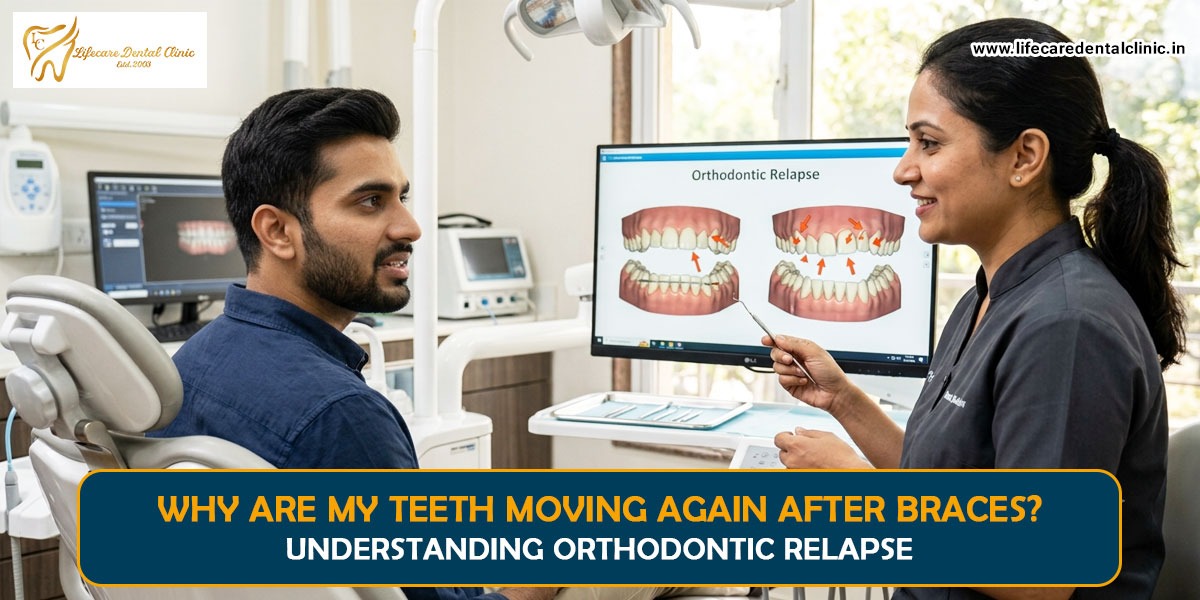
Teeth can shift after orthodontic treatment, particularly when retainers are not worn as recommended. This movement is known as orthodontic relapse.
If you're searching for the Best Orthodontic Treatment in Panchkula because your teeth have started moving again, the solution isn't always to repeat your original treatment. First, it's important to understand why the movement happened and how much correction is actually required.
Why Do Teeth Move After Braces?
Orthodontic treatment moves teeth into new positions by applying controlled forces over time.
After treatment, the tissues and bone surrounding the teeth need time to adapt to their new positions. Even after this adaptation, teeth aren't permanently locked in place.
Natural changes can continue throughout life.
Several factors can contribute to tooth movement after braces, including:
1. Not Wearing Your Retainer
This is one of the most common reasons for relapse.
A retainer helps hold teeth in their corrected positions. If you stop wearing it, the teeth may gradually move.
2. Natural Aging
Your teeth and jaws continue to change throughout adulthood. These changes can affect alignment even in someone who previously had successful orthodontic treatment.
3. Growth and Jaw Changes
For younger patients, continued growth can influence tooth and bite relationships after active orthodontic treatment.
4. Gum and Bone Changes
Changes in periodontal health can affect the tissues supporting your teeth. Gum disease should therefore be addressed promptly rather than ignored.
5. Original Alignment Problem
Some types of crowding or spacing have a higher tendency to return. This makes long term retention particularly important.
Does Retainer Use Really Matter?
Yes.
A retainer doesn't "finish" the movement of your teeth. Its job is to help maintain the position achieved during active orthodontic treatment.
There are several types of retainers.
1. Removable Retainers
These can be taken out for eating and cleaning and are available in different designs.
2. Fixed Retainers
A thin wire can be bonded behind selected teeth to help maintain their position.
3. Clear Retainers
Transparent removable retainers are popular because they are discreet and can closely fit over the teeth.
Your orthodontist can recommend the appropriate type based on your treatment and the areas most likely to relapse.
What If You Stopped Wearing Your Retainer?
Don't immediately try to force an old retainer onto your teeth if it no longer fits properly.
A retainer that was made when your teeth were in a different position may be too tight or may not fit correctly after tooth movement.
Instead, have your teeth assessed.
Your orthodontist can determine whether:
- The existing retainer can still be used
- A new retainer is required
- Minor orthodontic correction is needed
- More comprehensive treatment is necessary
The earlier you address unwanted movement, the simpler the correction may be.
Can Clear Aligners Correct Teeth That Have Shifted?
In selected cases, yes.
Patients who experience mild orthodontic relapse may be suitable for clear aligner treatment.
For example, a person who previously had braces and has developed minor crowding of the front teeth may not necessarily need a complete traditional braces treatment again.
However, clear aligners aren't appropriate for every relapse.
The orthodontist needs to evaluate the current tooth positions, bite, gum health, and the amount and direction of movement required.
This is why purchasing aligners without an orthodontic assessment can be problematic.
Why Relapse Shouldn't Be Treated as Only a Cosmetic Problem?
A slightly crooked front tooth may seem like a purely aesthetic concern.
But orthodontic relapse can sometimes be associated with changes in spacing, bite, tooth rotation, or the way the upper and lower teeth meet.
If the movement is accompanied by:
- Bleeding gums
- Gum recession
- Loose teeth
- Increasing gaps
- Difficulty cleaning
- Changes in your bite
a dental examination becomes particularly important.
Tooth movement should not automatically be assumed to be a simple orthodontic issue.
What Happens During a Relapse Assessment?
An orthodontic consultation for previously treated teeth is different from simply asking for new braces.
The orthodontist may review your previous treatment records if they are available and examine your current:
1. Tooth alignment
Which teeth have moved and by how much?
2. Bite
Has the relationship between the upper and lower teeth changed?
3. Retainer
Does your existing retainer fit correctly?
4. Gums
Are the supporting tissues healthy?
5. Previous treatment
What type of orthodontic correction was completed previously?
This information helps determine whether you need a new retainer, minor correction, or more comprehensive orthodontic treatment.
How Can You Reduce the Risk of Orthodontic Relapse?
You cannot completely prevent natural tooth movement, but you can reduce the risk of significant relapse.
1. Follow Your Retainer Schedule
Wear your retainer exactly as instructed by your orthodontist.
2. Replace Damaged Retainers
A cracked, distorted, or poorly fitting retainer may not provide the intended retention.
3. Don't Ignore Changes
If your retainer suddenly feels different or a tooth starts moving, contact your dentist or orthodontist rather than waiting for the problem to become more noticeable.
4. Maintain Good Gum Health
Healthy supporting tissues are an important part of maintaining your teeth.
5. Keep Regular Dental Appointments
Routine dental examinations can identify gum problems, tooth movement, and other concerns early.
Is Orthodontic Retreatment Possible for Adults?

Absolutely.
Previous braces do not prevent you from receiving orthodontic treatment again.
Adults may return for treatment because of:
- Relapse after previous braces
- Changes in tooth position
- A retainer that was lost or damaged
- New spacing
- Crowding
- Changes in bite
Depending on the situation, treatment may involve clear aligners, traditional braces, or another orthodontic approach.
The treatment plan should be based on your current dental condition rather than simply repeating your previous treatment.
When Should You See an Orthodontist?
Consider an orthodontic evaluation if you notice that:
- Your old retainer no longer fits
- Your front teeth are becoming crowded again
- A gap has returned
- Your bite feels different
- Your teeth have noticeably shifted
- You stopped wearing your retainer for an extended period
You don't have to wait until the teeth have completely returned to their previous positions.
Early evaluation can help determine whether a small correction is enough.
Orthodontic Care at Lifecare Dental Clinic, Panchkula
At Lifecare Dental Clinic, orthodontic treatment is approached according to the patient's current dental condition.
If you've previously undergone braces or aligner treatment and are now noticing changes in your smile, an assessment can help determine whether you need a new retainer, minor orthodontic correction, or more comprehensive treatment.
The focus is on understanding the reason for the movement and selecting an appropriate solution rather than automatically starting a new course of treatment.
For patients searching for the Best Orthodontic Treatment in Panchkula, this individualized approach can make the treatment process more predictable and relevant to their actual needs.
Your Orthodontic Treatment Doesn't End With Straight Teeth
Braces and aligners can move your teeth, but maintaining that result requires ongoing care.
Retainers, dental hygiene, gum health, and regular professional monitoring all play a role in keeping your smile aligned.
If you've noticed your teeth shifting after braces or your old retainer no longer fits, don't ignore the change.
A small movement today may be much easier to address than significant relapse later.
Leave A Reply