
Laser Teeth Whitening in Chandigarh: How to Get a Brighter Smile Without Ignoring Tooth Sensitivity?
Published Date: November 16, 2026 Last Update: November 16, 2026
Author: Dr. Kritika Bansal
A brighter smile is appealing, but choosing a teeth whitening treatment is not just about finding the quickest way to change the color of your teeth. If you already experience sensitivity to cold drinks, hot foods, or sweet treats, you may be wondering whether professional whitening is suitable for you.
Laser teeth whitening treatment in Chandigarh is one option for people looking to improve the appearance of stained or discolored teeth. However, the right approach depends on the cause of discoloration, your dental health, and how sensitive your teeth are.
Understanding the available options can help you make a better decision instead of choosing a treatment based only on how quickly it promises to work.
What Makes Laser Teeth Whitening Different?
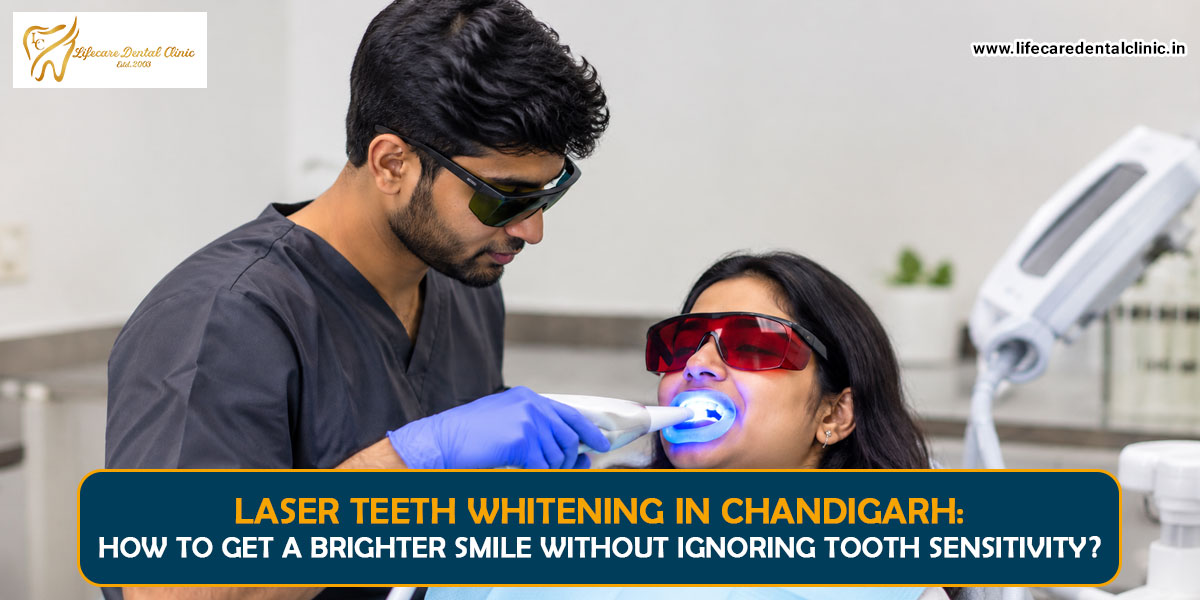
Professional laser teeth whitening is performed under dental supervision. The dentist applies a whitening gel to the teeth, and a specific light or laser system may be used as part of the treatment process, depending on the technique and equipment.
The whitening gel contains an active ingredient, commonly hydrogen peroxide, that helps break down certain compounds responsible for tooth discoloration. This can make the teeth appear lighter.
The procedure is generally completed during a dental appointment, although the exact duration and results vary according to the product, concentration, and individual response.
It is important to understand that laser or light activation does not automatically mean better results for everyone. The whitening agent, treatment protocol, and condition of your teeth all matter.
Is Professional Teeth Whitening Better Than Home Remedies?
When searching for the best way to whiten teeth, you may come across whitening toothpaste, home remedies, over-the-counter strips, and professional dental treatments.
These options work differently and are not equally suitable for every type of staining.
-
Whitening toothpaste: These products mainly help remove surface stains through mild polishing ingredients. They may improve the appearance of teeth over time but generally do not produce the same shade change as professional bleaching.
-
Whitening strips and gels: Over-the-counter products contain whitening ingredients in controlled concentrations. Results depend on the formulation and consistent use. Incorrect use or excessive application may increase sensitivity or irritate the gums.
-
Home remedies: Ingredients such as lemon juice, vinegar, and abrasive powders are sometimes promoted for whitening. However, acidic substances can contribute to enamel erosion, while abrasive materials may wear down the tooth surface. These are not recommended whitening methods.
-
Professional whitening: A dentist first checks your teeth and gums, identifies the likely cause of discoloration, and recommends an appropriate treatment. This makes professional whitening a more controlled option, particularly if you have existing sensitivity or dental concerns.
The best teeth whitening option is not necessarily the strongest or fastest one. It is the method that can address your type of discoloration without creating avoidable dental problems.
What Is the Best Teeth Whitening for Sensitive Teeth?
If your teeth are already sensitive, whitening requires additional care. Some people experience temporary sensitivity during or after bleaching because whitening ingredients can affect the tooth's internal tissues.
That does not mean everyone with sensitive teeth must avoid whitening. It means the cause of sensitivity should be assessed before treatment.
A dentist may recommend:
- A sensitivity assessment: The dentist checks whether discomfort is related to exposed dentin, enamel wear, gum recession, cavities, cracks, or another issue.
- Treating existing dental problems: Cavities, damaged restorations, and gum conditions may need attention before whitening.
- A suitable whitening formulation: The dentist can select an appropriate product and treatment approach based on your dental condition.
- Sensitivity management: Desensitizing toothpaste or other professional measures may be recommended before or after treatment.
- A gradual approach: Some patients may benefit from a less intensive whitening plan rather than trying to achieve a dramatic shade change in one session.
For people looking for the best teeth whitening for sensitive teeth, a dental assessment is more useful than choosing a product based on online reviews. The safest option depends on why the teeth are sensitive and how they respond to treatment.
Who Is a Suitable Candidate for Laser Teeth Whitening?
Professional whitening may be considered by adults who have healthy teeth and gums but are unhappy with discoloration.
It can be useful for certain types of stains caused by:
- Coffee, tea, and other strongly colored drinks
- Tobacco use
- Certain foods and beverages
- Natural changes in tooth color with age
- Surface staining that remains after routine oral hygiene
However, not all discoloration responds equally well. Staining caused by trauma, certain medications, excessive fluoride exposure, or changes within the tooth may require a different approach.
Whitening also does not change the color of crowns, veneers, fillings, or other dental restorations. If these are visible when you smile, the dentist should consider their appearance before recommending treatment.
What Should You Expect During a Whitening Appointment?
Knowing what happens during the appointment can make the decision easier.
1. Initial dental examination
The dentist examines your teeth and gums, discusses your expectations, and checks for sensitivity, cavities, gum inflammation, or existing restorations.
2. Assessment of tooth color
The dentist evaluates the type and extent of discoloration. This helps determine whether professional whitening is likely to produce the improvement you want.
3. Preparation
If whitening is suitable, the teeth and surrounding soft tissues are prepared according to the treatment protocol. Protective measures are used to reduce contact between the whitening product and the gums.
4. Application of the whitening gel
The whitening gel is applied to the teeth. If the selected system uses light or laser activation, it is performed according to the manufacturer's and dentist's instructions.
5. Review of the results
After the procedure, the dentist checks the teeth and discusses the outcome, possible temporary sensitivity, and aftercare instructions.
The final shade varies from person to person. A natural-looking improvement is often a more realistic goal than expecting every tooth to become an extremely bright white.
How Can You Reduce Sensitivity After Teeth Whitening?
Some people experience temporary sensitivity after professional whitening. It may feel like a brief sharp sensation when consuming cold or hot foods and drinks. This usually settles, but persistent or severe discomfort should not be ignored.
You can help manage sensitivity by following your dentist's instructions:
- Use a desensitizing toothpaste if recommended.
- Avoid very hot or cold foods and drinks if they trigger discomfort.
- Choose a soft-bristled toothbrush.
- Avoid additional whitening products unless your dentist approves them.
- Maintain regular brushing and flossing without applying excessive pressure.
- Contact your dentist if sensitivity is severe, worsening, or continues longer than expected.
Do not repeat whitening sessions too frequently in an attempt to achieve a lighter shade. Excessive or inappropriate use of whitening products can increase irritation and sensitivity.
How Long Do Whitening Results Last?
Whitening results are not permanent. Their longevity depends on your eating and drinking habits, oral hygiene, tobacco use, natural tooth structure, and the original cause of discoloration.
Coffee, tea, red wine, and tobacco can contribute to new surface stains. This does not mean you must avoid every food or drink that can stain teeth. Good oral hygiene and sensible habits can help maintain the results.
You should also avoid scheduling repeated whitening treatments without a dental review. Your dentist can advise whether additional treatment is appropriate and when it should be considered.
Choosing Laser Teeth Whitening Treatment in Chandigarh

Before booking a whitening appointment, consider more than the treatment name or advertised results. A suitable dental clinic should assess your oral health, explain the whitening process, discuss possible sensitivity, and set realistic expectations.
At Lifecare Dental Clinic, patients can discuss their smile concerns and explore suitable cosmetic dental options with the guidance of an experienced dental professional. Dr. Amit Sharma brings over 20 years of dental experience, helping patients understand their treatment choices before proceeding.
If you are considering laser teeth whitening treatment in Chandigarh, schedule a consultation to find out whether professional whitening is appropriate for your teeth and what results you can reasonably expect.
Frequently Asked Questions
1. Is laser teeth whitening safe for sensitive teeth?
It may be suitable for some people with sensitive teeth, but the cause of sensitivity should be evaluated first. Your dentist may recommend treating the underlying problem or using a modified whitening approach.
2. What is the best way to whiten teeth quickly?
Professional dental whitening can produce a noticeable improvement within a relatively short period. However, the results depend on the type of staining, the whitening system, and your dental health.
3. Does laser teeth whitening damage enamel?
When performed correctly under dental supervision, professional whitening is not generally considered to damage healthy enamel. Using whitening products too frequently or incorrectly can cause sensitivity and irritation, so professional guidance is important.
4. Can I whiten my teeth if I have crowns or fillings?
Yes, natural teeth may be whitened in some cases, but crowns, fillings, and veneers do not respond to bleaching agents. Their color may not match the surrounding teeth afterward, so your dentist should assess them before treatment.
5. How long does professional teeth whitening take?
The appointment duration depends on the whitening system and treatment plan. Your dentist can explain the expected time after examining your teeth.
6. Is professional whitening better than whitening toothpaste?
Professional whitening can change the natural color of teeth more noticeably. Whitening toothpaste mainly helps remove surface stains. The right choice depends on your expectations and the type of discoloration.
Leave A Reply