
Do You Think Your Teeth Are Clean? Here’s Why Professional Teeth Cleaning Still Matters
Published Date: June 13, 2026 Last Update: June 15, 2026
Author: Dr. Manpreet S. Walia
Most people believe that brushing twice a day and using mouthwash is enough to maintain healthy teeth. While these habits are essential, they only tell part of the story. Even people with excellent oral hygiene can develop plaque and tartar buildup in areas that are difficult to reach with a toothbrush. Over time, this buildup can lead to bad breath, stained teeth, bleeding gums, and even gum disease. That is why dentists recommend professional teeth cleaning as part of routine oral care. At Lifecare Dental Clinic, many patients are surprised to learn that their teeth may look clean on the surface while plaque and tartar continue to accumulate below the gum line.
What Is Professional Teeth Cleaning?
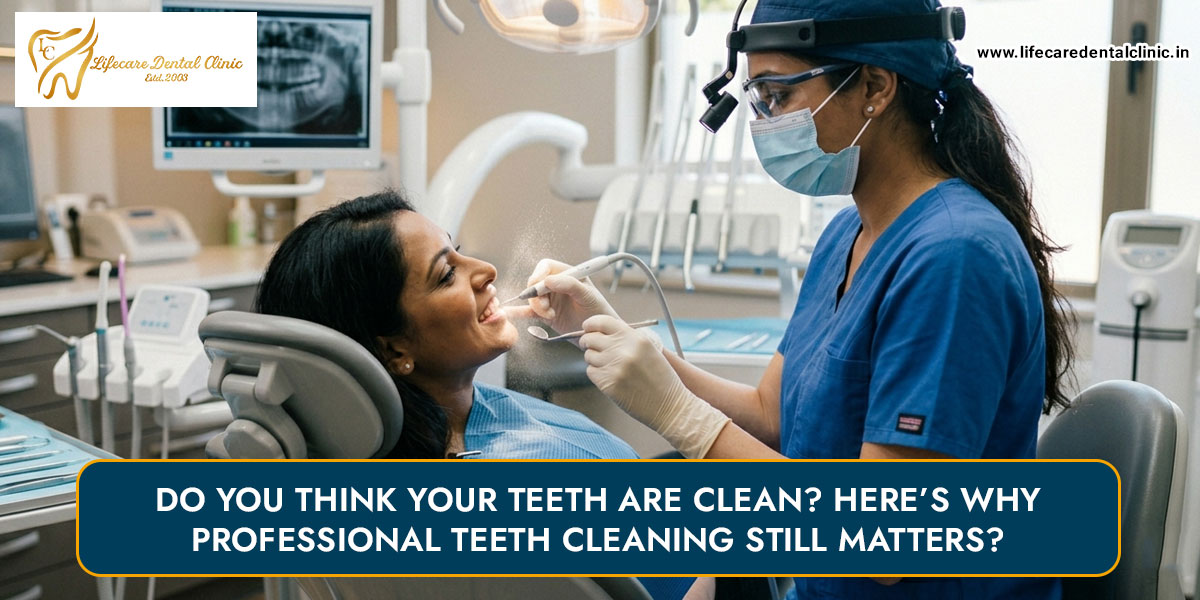
Professional teeth cleaning is a preventive dental procedure that removes plaque, tartar, and stains from areas that regular brushing and flossing cannot fully clean. Unlike plaque, which is soft and can be removed at home, tartar becomes hardened over time and requires professional dental instruments for safe removal.
A professional cleaning appointment helps restore oral hygiene and reduces the risk of future dental problems.
Why Brushing Alone Is Not Enough?
No matter how carefully you brush, certain areas of the mouth remain difficult to clean consistently. Plaque commonly accumulates:
- Between teeth
- Behind the back teeth
- Near the gum line
- Around dental restorations
- Around braces and aligners
When plaque remains on teeth for too long, it hardens into tartar. Once tartar forms, no toothbrush or toothpaste can remove it. This is where professional cleaning becomes essential.
Common Signs You Need a Dental Cleaning
Many people wait until they experience pain before visiting a dentist. However, your mouth often gives warning signs much earlier. You may benefit from professional teeth cleaning if you notice:
- Bleeding while brushing
- Bad breath that does not improve
- Yellow deposits near the gums
- Swollen or red gums
- Tooth sensitivity
- Visible stains on teeth
- A rough feeling when you run your tongue across your teeth
Even if none of these symptoms are present, preventive cleanings remain important for maintaining oral health.
What Happens During a Professional Teeth Cleaning Appointment?
Many first-time patients worry that cleaning will be uncomfortable. In reality, most cleanings are simple, gentle, and relatively quick. A typical appointment may include:
- Oral examination
- Plaque and tartar removal
- Cleaning around the gum line
- Polishing to remove surface stains
- Oral hygiene recommendations
The result is cleaner teeth, fresher breath, and healthier gums. Many patients immediately notice how smooth their teeth feel afterward.
What Is Deep Teeth Cleaning?
Professional cleaning and deep cleaning are not always the same thing. A standard cleaning focuses on the visible surfaces of the teeth and the area around the gum line. Deep teeth cleaning is recommended when gum disease begins affecting the tissues below the gums.
This procedure, often called scaling and root planing, removes bacteria and tartar from beneath the gum line and smooths the root surfaces to encourage healing. Deep cleaning may be necessary if you have:
- Persistent bleeding gums
- Gum recession
- Deep pockets around teeth
- Early gum disease
- Chronic bad breath
- Bone loss caused by periodontal disease
Treating gum disease early can help prevent tooth loss and more extensive dental procedures later.
The Hidden Benefits of Professional Teeth Cleaning

Many people think cleaning is only about making teeth look better. In reality, the benefits go far beyond appearance. Regular professional cleaning can help:
- Reduce cavity risk
- Prevent gum disease
- Improve breath freshness
- Remove stubborn stains
- Protect tooth enamel
- Identify dental problems early
- Support overall oral health
- Reduce future treatment costs
Preventive care is often far easier and more affordable than treating advanced dental problems.
The Connection Between Gum Health and Overall Health
Your mouth is connected to the rest of your body. Research has shown that poor gum health may be associated with several health conditions, including heart disease, diabetes, and systemic inflammation.
While dental cleaning cannot prevent every health condition, maintaining healthy gums contributes to better overall wellness. This is one reason dentists place such importance on preventive care.
How Often Should You Schedule a Cleaning?
For many patients, a professional cleaning every six months is ideal. However, some individuals may benefit from more frequent visits, including:
- Smokers
- Diabetic patients
- Patients with gum disease
- People with heavy tartar buildup
- Patients undergoing orthodontic treatment
Your dentist can recommend a schedule that matches your oral health needs.
Why Patients Choose Lifecare Dental Clinic?
If you are looking for a trusted dental cleaning service in Tricity, choosing the right dental team matters. At Lifecare Dental Clinic, we provide:
- Professional teeth cleaning
- Deep teeth cleaning for gum health
- Comprehensive oral examinations
- Advanced dental technology
- Comfort-focused care
- Personalized preventive treatment plans
Our goal is not only to treat dental problems but to help prevent them before they begin.
Healthy Teeth Start With Prevention
Many serious dental issues begin quietly. Plaque becomes tartar. Mild gum inflammation becomes gum disease. Small problems gradually become larger and more expensive to treat.
Regular professional teeth cleaning helps stop that process before it starts. If it has been more than six months since your last cleaning, now may be the perfect time to schedule a visit. Because maintaining a healthy smile is much easier than rebuilding one.
Leave A Reply