
Dental Implants in Chandigarh: How to Choose the Right Implant Treatment for Long Term Results?
Published Date: August 19, 2026 Last Update: August 19, 2026
Author: Dr. Manpreet S. Walia
A missing tooth is more than a gap in your smile. It can change the way you chew, affect neighboring teeth, and gradually alter the bone that once supported the missing tooth.
Dental implants have become one of the most established options for replacing missing teeth because they can provide a fixed restoration that closely resembles the function and appearance of a natural tooth.
However, choosing dental implants in Chandigarh should not be based on price or the implant brand alone. Successful implant treatment depends on diagnosis, gum health, bone support, treatment planning, surgical technique, restoration, and long-term maintenance.
If you're comparing options for the best dental implant in Chandigarh, here's what you should know before starting treatment.
What Is a Dental Implant?
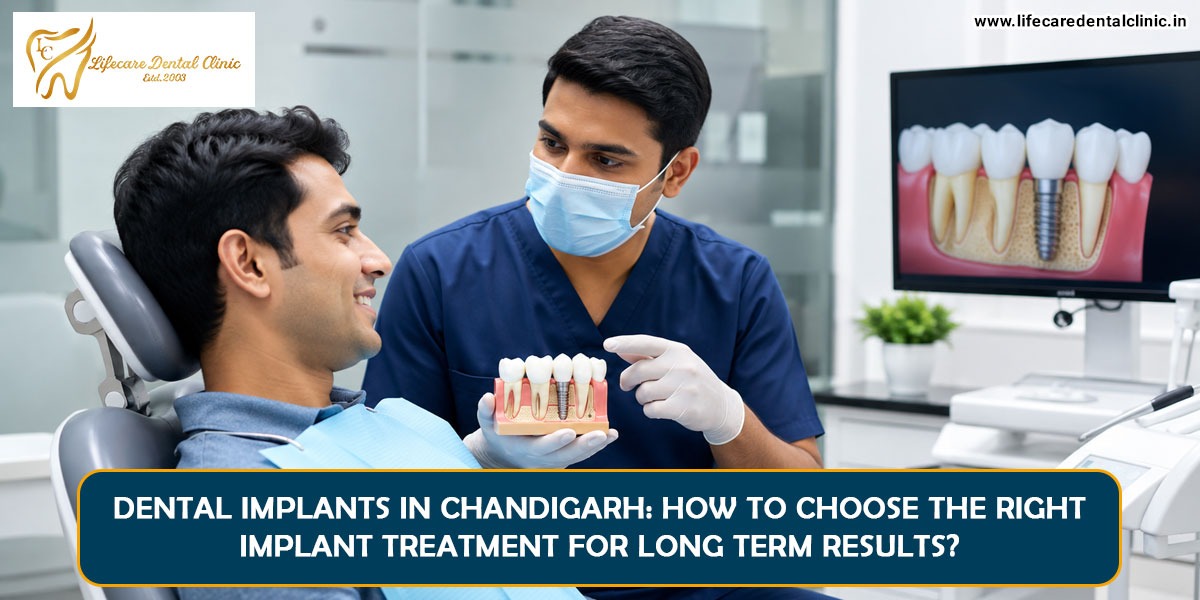
A dental implant is a biocompatible fixture placed into the jawbone to support a replacement tooth. A typical implant restoration has three components:
1. Implant fixture: The portion placed within the jawbone.
2. Abutment: The connector between the implant and restoration.
3. Crown: The visible tooth designed to restore appearance and function.
After placement, the implant undergoes osseointegration, a biological process in which bone forms around the implant and provides stability.
This is different from a conventional dental bridge, which relies on neighboring teeth for support.
Why Replace a Missing Tooth?
It can be tempting to leave a missing tooth alone, particularly when it isn't causing pain. But tooth loss can have consequences beyond appearance.
1. Changes in chewing
A missing tooth can make it harder to chew certain foods comfortably. Some people unconsciously shift chewing to the opposite side, placing additional load on other teeth.
2. Movement of neighboring teeth
Teeth can gradually move toward an empty space, potentially changing your bite and making certain areas more difficult to clean.
3. Bone changes
When a tooth root is lost, the surrounding jawbone no longer receives the same stimulation. Bone resorption can occur over time, reducing the available bone in that area.
4. Changes in your smile
A missing front tooth can obviously affect appearance, but missing back teeth can also influence the overall balance and function of your bite.
Replacing a missing tooth at the appropriate time can help address these concerns.
What Makes Someone a Good Candidate for Dental Implants?
Dental implants are suitable for many adults, but implant treatment requires an individual assessment. Your dentist or implant team will evaluate:
- The condition of your gums
- Available bone volume and quality
- The position of nerves and other anatomical structures
- Your bite and remaining teeth
- Oral hygiene
- Medical history
- Smoking or tobacco use
- Your ability to maintain the implant after treatment
Good gum health is particularly important. This is where a periodontist can play an important role.
Why Gum Health Matters Before Dental Implant Treatment?
An implant is placed into the jawbone, but the surrounding gums are equally important for long term stability. Active gum disease should be addressed before implant placement. Bacterial infection and inflammation around natural teeth can increase the risk of complications around implants.
A periodontist specializes in the prevention, diagnosis, and treatment of diseases affecting the gums and supporting structures of the teeth. If you have:
- Bleeding gums
- Gum recession
- Loose teeth
- Deep periodontal pockets
- Significant bone loss
- A history of advanced gum disease
A periodontal evaluation can be an important part of your implant assessment. The goal is to create a healthy foundation before replacing the missing tooth.
What Happens During Dental Implant Treatment?
The exact process varies from patient to patient, but implant treatment generally involves several stages.
1. Comprehensive Examination
Your dentist evaluates your teeth, gums, bite, and overall oral health. Digital X-rays and, when clinically indicated, CBCT imaging provide detailed information about the available bone and important anatomical structures.
2. Treatment Planning
Your dentist determines the ideal implant position and discusses the type of restoration required. If additional procedures are necessary, such as treatment of gum disease, bone grafting, or sinus-related procedures, these are incorporated into the treatment plan.
3. Implant Placement
The implant fixture is surgically placed into the jawbone under appropriate anesthesia.
4. Healing and Osseointegration
The implant needs time to integrate with the surrounding bone. The duration varies depending on the individual case and treatment approach.
5. Abutment and Crown
Once the implant has adequately healed and is ready for restoration, the final crown is fabricated and attached. The crown is designed to match the surrounding teeth in shape, size, and color.
What Are Full Mouth Dental Implants?
Patients who have lost most or all of their teeth may require a more comprehensive solution.
Full mouth dental implants involve using strategically placed dental implants to support a complete set of fixed replacement teeth. This is different from replacing one missing tooth with a single implant. Full mouth implant treatment requires careful assessment of:
- Remaining teeth
- Gum health
- Jawbone condition
- Bite relationship
- Facial structure
- Implant positions
- Prosthetic design
- Long term maintenance
The number of implants required is not identical for every patient. Your dentist will determine the appropriate treatment design based on your anatomy and restorative requirements.
Are Full Mouth Dental Implants the Same as Dentures?
No. Traditional removable dentures rest on the gums and can be removed by the patient. Implant supported full arch restorations use dental implants to provide support and retention for a fixed or removable prosthetic solution, depending on the treatment plan.
For suitable patients, implant supported teeth can provide greater stability during chewing and speaking compared with conventional removable dentures. However, full mouth implant treatment is a significant procedure and requires careful planning. It is not appropriate to assume that implants are automatically the best choice for every patient.
Can You Get Dental Implants If You Have Bone Loss?
Bone loss does not automatically mean you cannot receive implants. The important question is whether there is sufficient bone in the appropriate location to provide stable implant support.
When bone volume is inadequate, additional procedures such as bone grafting may be considered. Some patients may also be candidates for other implant planning techniques depending on the location and extent of bone loss.
A CBCT scan provides important information about the three dimensional anatomy and helps the implant team determine which options are clinically appropriate.
How Long Do Dental Implants Last?
Dental implants are designed to provide long term tooth replacement, but they are not maintenance free. Their longevity depends on several factors, including:
- Oral hygiene
- Gum health
- Regular professional examinations
- Implant maintenance
- Smoking and tobacco use
- Bite forces
- Overall health
- Proper treatment planning
The implant itself and the visible crown have different maintenance considerations. The crown may eventually require repair or replacement even when the implant remains stable. Regular follow up is therefore an important part of implant care.
How to Find the Best Dental Implant in Chandigarh?

When searching for the best dental implant in Chandigarh, don't focus only on the brand name or advertised price. Instead, ask about the complete treatment.
1. Who will perform the implant procedure?
Understand the dentist's relevant training and experience in implant treatment.
2. How will the case be diagnosed?
Ask whether clinical examination and appropriate imaging are being used to evaluate bone, gums, nerves, and surrounding structures.
3. What happens if you have gum disease?
A responsible implant plan should address active gum disease before implant placement.
4. What exactly is included in the quoted cost?
Ask whether the price includes consultation, imaging, implant fixture, abutment, crown, surgical procedures, and follow up, as applicable.
5. What happens after the implant is placed?
Implant success doesn't end when the crown is fitted. Ask about maintenance appointments and long term monitoring. The best implant treatment is not necessarily the cheapest or most expensive option. It is treatment that is appropriately planned for your individual anatomy, oral health, functional requirements, and long term goals.
What Can Cause Dental Implant Failure?
Dental implants have high success rates, but complications can occur. Risk factors include:
- Poor oral hygiene
- Untreated gum disease
- Smoking
- Poorly controlled medical conditions
- Insufficient bone support
- Excessive biting forces
- Inadequate treatment planning
- Failure to attend maintenance appointments
One important complication is peri-implant disease, an inflammatory condition affecting the tissues around an implant. This is another reason why maintaining healthy gums and attending regular dental examinations is essential after implant treatment.
How Should You Care for Dental Implants?
Implants should be treated as part of your mouth not as artificial teeth that require no maintenance. Your daily routine should include:
- Brush twice daily: Use a soft toothbrush and fluoride toothpaste unless your dentist recommends otherwise.
- Clean between teeth: Floss, interdental brushes, or other recommended cleaning aids can help remove plaque around the implant and neighboring teeth.
- Attend maintenance appointments: Your dentist can monitor the implant, gums, bite, and restoration.
- Avoid tobacco: Smoking increases the risk of gum disease and can negatively affect implant outcomes.
- Report changes early: Bleeding, swelling, persistent discomfort, looseness, or changes around an implant should be assessed rather than ignored.
Are Dental Implants Painful?
Implant placement is performed under local anesthesia, so the procedure itself should be comfortable. After treatment, some patients experience temporary swelling, tenderness, or discomfort. The level of discomfort depends on the complexity of the procedure and the individual's healing response.
Your dental team will provide specific post-operative instructions and medications when appropriate. Following those instructions carefully can support a smoother recovery.
Why Choose Lifecare Dental Clinic for Dental Implants in Chandigarh?
Implant dentistry requires more than placing an implant into the jaw. At Lifecare Dental Clinic, treatment planning considers the complete picture: your missing tooth or teeth, gum health, bone condition, bite, aesthetic requirements, and long term maintenance. Our approach includes:
- Comprehensive dental examinations
- Digital diagnostic imaging when clinically indicated
- Implant treatment planning
- Gum and periodontal evaluation
- Single tooth replacement
- Multiple tooth replacement
- Full mouth implant treatment planning
- Restorative and cosmetic dental care
- Personalized aftercare and maintenance guidance
The objective is to provide a treatment plan based on your actual dental condition rather than offering the same implant solution to every patient.
Dental Implants Are a Long Term Decision
If you're living with a missing tooth, you don't have to make a decision based solely on appearance. Dental implants can restore chewing function, replace missing teeth, and provide a fixed tooth replacement option for suitable patients. But successful treatment begins long before the implant is placed.
Your gums need to be healthy. Your bone needs to be evaluated. Your bite needs to be considered. Your treatment should be properly planned, and you need to understand how to maintain the implant afterward.
Whether you need dental implants in Chandigarh for one missing tooth or are exploring full mouth dental implants, start with a comprehensive consultation.
At Lifecare Dental Clinic, our team can evaluate your oral health, explain your available options, and help you understand what type of tooth replacement is appropriate for your situation.
The right implant treatment isn't simply about replacing a tooth. It's about creating a stable, functional, maintainable result that supports your oral health for years to come.
Frequently Asked Questions
1. How much do dental implants cost in Chandigarh?
The cost varies significantly depending on the number of missing teeth, implant system, bone condition, gum health, type of restoration, and whether additional procedures are required. A personalized examination is necessary to provide an accurate estimate.
2. Can one dental implant replace one missing tooth?
Yes. A single implant can support an individual crown when the patient has suitable bone and healthy surrounding tissues.
3. Are dental implants better than bridges?
Neither option is automatically better for every patient. Implants can replace a tooth without relying on neighboring teeth for support, while bridges may be appropriate in other situations. Your dentist can explain which option suits your case.
4. Can a periodontist help with dental implant treatment?
Yes. A periodontist specializes in the gums and supporting structures of the teeth and may be involved in evaluating and treating gum disease, bone conditions, gum recession, and implant-related tissue concerns.
5. Are full mouth dental implants suitable for everyone?
No. Full mouth implant treatment requires careful assessment of oral health, bone, gums, bite, medical history, and the patient's ability to maintain the restorations.
6. How long does dental implant treatment take?
Treatment time varies. Some cases can be completed relatively quickly, while others require healing periods or additional procedures such as bone grafting or gum treatment. Your dentist can provide a more accurate timeline after evaluating your case.
Leave A Reply